- AUTOMATION EQUIPMENT
- DIGITAL CONTROL
- ELECTRICAL ITEMS
- AMPLIFIER & UPS
- BATTERY CHARGER & INVERTER
- CIRCUIT BREAKER & BLOCKS
- CONTROL UNIT
- ELECTRIC CONTROLLERS
- FIRE ALARAM SYSTEM
- FUSES & CAPACITOR
- HEADPHONE & SPEAKER
- HMI & DISPLAY
- MISC ELECTRICAL
- PCB
- PLC SYSTEMS
- POWER SUPPLY
- PRINTER & CPU
- RELAY
- SENSORS
- SERVO DRIVES & MOTORS
- TELECOME & COMMUNICATION
- THERMOSTAT
- MACHINERY
- SENSORS
- UNCATEGORIZED
Hotline Order:
(+91) 97257 54777
Email ID:
shipnavstore@gmail.com

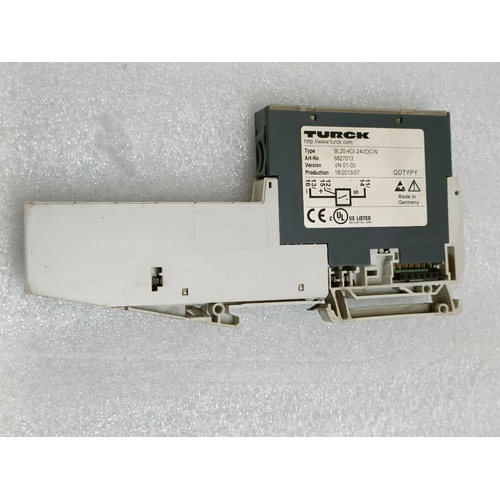
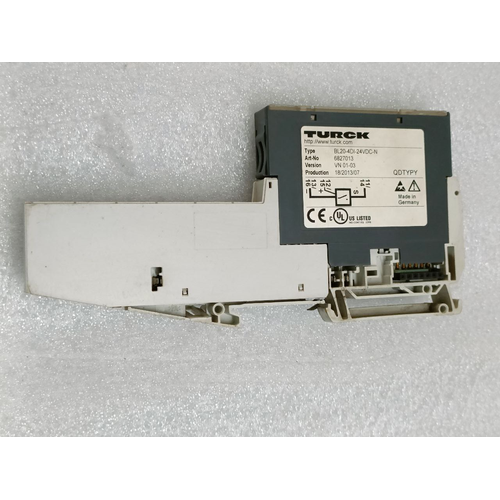
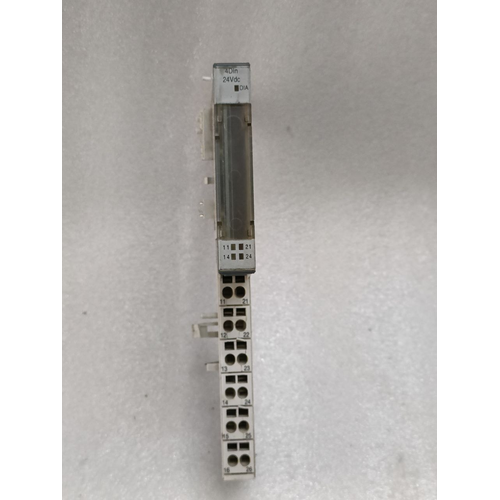
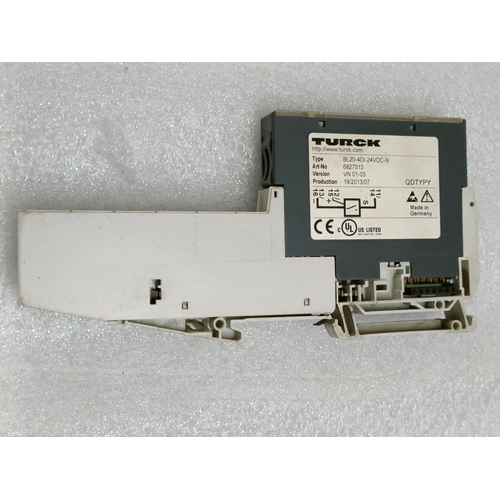
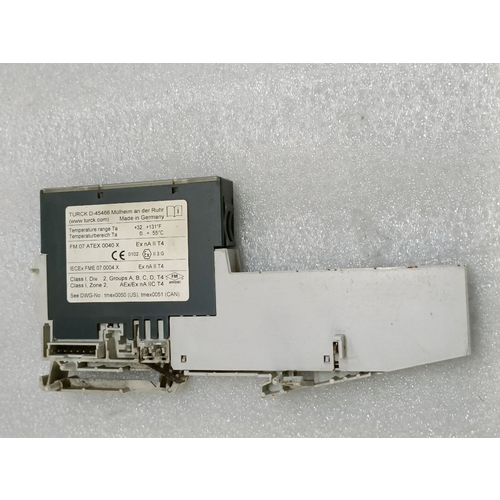
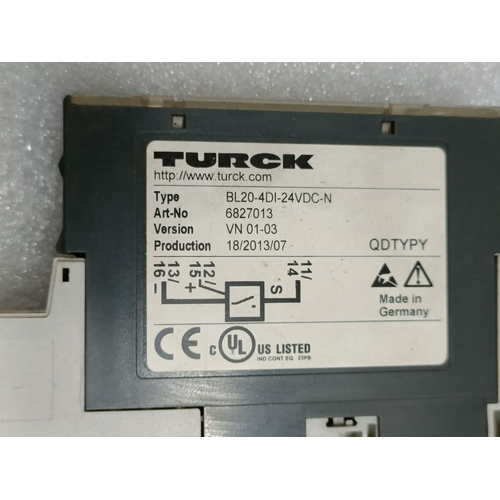
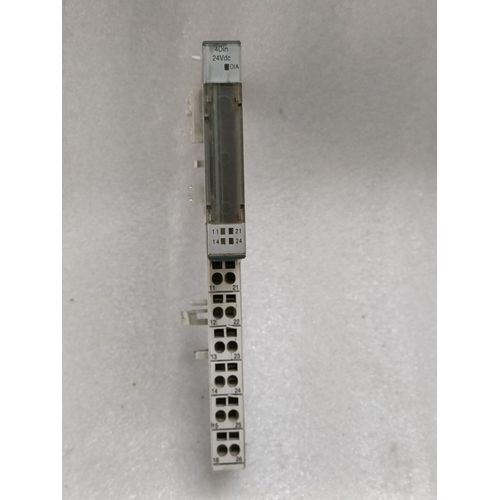
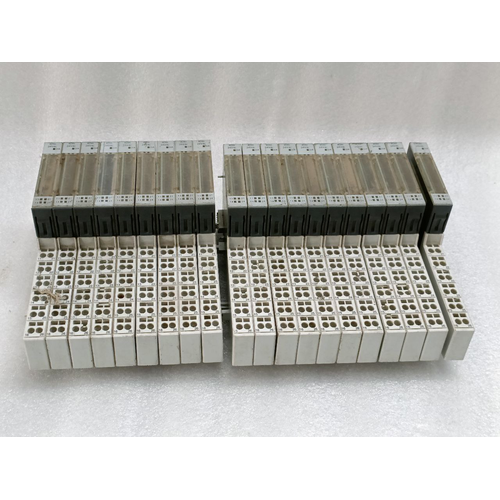
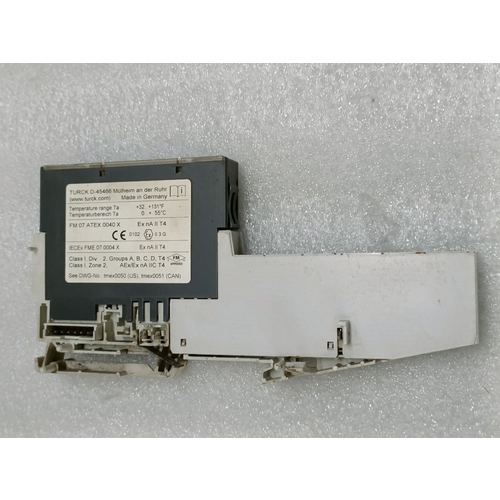
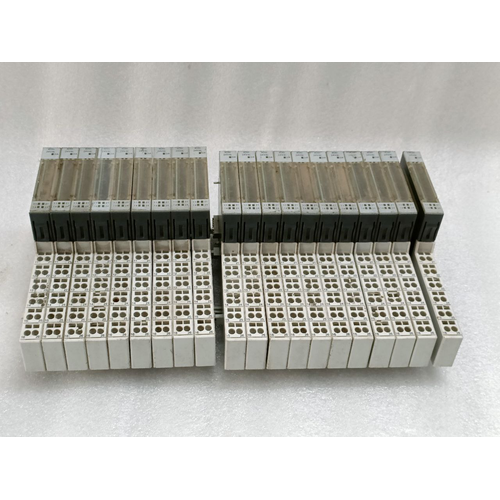
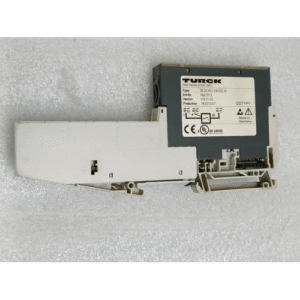
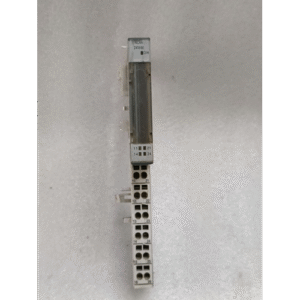
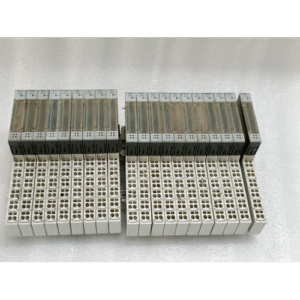
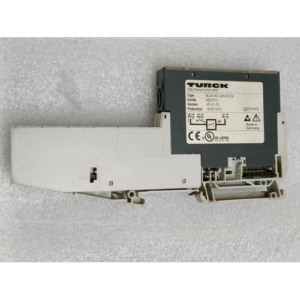
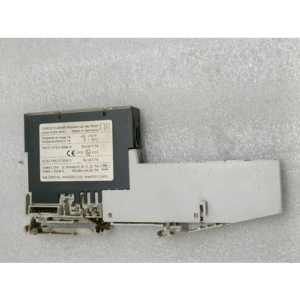
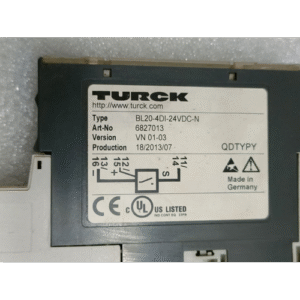
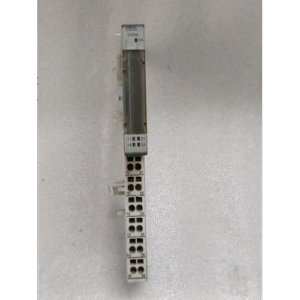
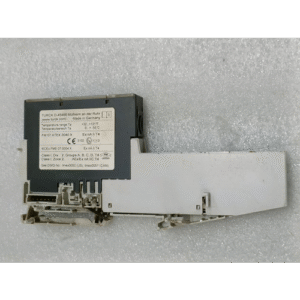
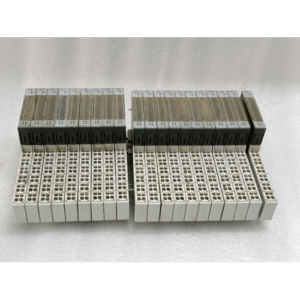
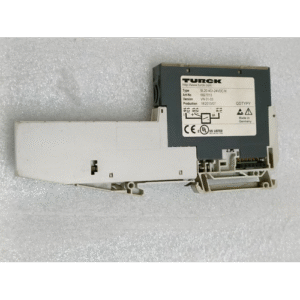
Turck BL20 input module BL20-4DI-24VDC-N 6827013 4 pt NPN module
₹2,130.00
| Product Conditioned | USED |
|---|
Free Shipping apply to all orders over $199
Guaranteed Money Back in 30 days return.
24/7 Customer Support
Share:
 Turck BL20 input module BL20-4...
₹2,130.00
Out of stock
Hotline Order:
(+101) 5620 - 8155
Email ID:
xstore@support.com
Description Item Specifics – Turck “Bus Stop” BL20 IO input module. 4 channels input “sinking” module.
Make: Turck IO
Product Type: IO module.
Platform: BL20
The Turck BL20-4DI-24VDC-N is a 4-channel discrete (digital) input module from the versatile and modular BL20 I/O system. It is designed to connect NPN-type field devices (such as sensors, switches, and encoders) to a higher-level control system like a PLC.
Its primary function is to read the ON/OFF status (e.g., 24V or 0V) from these devices and transmit this digital data to the controller over a fieldbus network (e.g., PROFINET, EtherNet/IP, PROFIBUS, etc.), which is determined by the chosen BL20 gateway.
Key Features & Specifications
| Feature | Specification |
|---|---|
| Product Family | Turck BL20 Modular I/O System |
| Type | Digital Input Module (DI) |
| Number of Channels | 4 |
| Input Type | NPN (Sinking) |
| Supply Voltage | 24 V DC (Nominal) |
| Input Current | Typically 5-7 mA per channel (at 24V) |
| Logic Level “1” (ON) | 15 to 30 V DC (High-level input voltage) |
| Logic Level “0” (OFF) | -3 to 5 V DC (Low-level input voltage) |
| Connection Type | Removable screw-terminal plug (simplifies wiring) |
| Electrical Isolation | 500 V (Channel-to-bus and channel-to-channel) |
| Diagnostics | Per-channel status via LED indicators |
| Housing Material | Polycarbonate (PC) |
| Protection Rating | IP20 |
| Article Number / Ordering Code | 6827013 |
Detailed Functional Description
1. NPN (Sinking) Input Logic
This is the most critical characteristic of this module:
-
NPN (Sinking): The input point acts as a “sink” for current. To activate an input (turn it ON), the connected field device must source the 24V DC signal.
-
In practice: This means the sensor’s output wire (often the brown or black wire) is connected to the module’s input channel. When the sensor is active, it switches the 24V signal to the module. The module “sinks” this current to ground, completing the circuit and reading the input as ON (or “1”).
-
Commonly used with: 3-wire DC NPN sensors.
Important Distinction: This module is not compatible with PNP (sourcing) sensors without external components. A PNP sensor outputs 0V when active, which this NPN module would not recognize as a valid “ON” signal.
2. Modular BL20 System
The BL20-4DI-24VDC-N is not a standalone device. It must be mounted onto a BL20 base module (gateway). The gateway determines the fieldbus protocol (e.g., PROFINET, EtherNet/IP, Modbus TCP, etc.) and handles the communication with the PLC. This modularity allows for highly flexible and cost-effective station design.
3. Status Indication
Each of the four input channels has an associated LED indicator. This LED turns on when the corresponding input channel is activated, providing clear visual diagnostics for troubleshooting.
4. Wiring
Wiring is simplified using a removable plug with screw terminals. The typical connection for one channel is:
-
Ix: The input point for the sensor’s signal wire.
-
0V / GND: The common return path for all inputs.
Comparison: NPN vs. PNP
To clarify the application, here is a simple comparison:
| Feature | This Module: NPN (Sinking) | Alternative: PNP (Sourcing) |
|---|---|---|
| Sensor Type | NPN | PNP |
| Signal Flow | Sensor sources current to the module. | Sensor sinks current from the module. |
| Active State | Sensor switches 24V to the input. | Sensor switches 0V (GND) to the input. |
| Wiring (Simplified) | Sensor Output → Module Input | Sensor Output → Module Input |
| Module 0V → Power Supply 0V | Module 24V → Power Supply 24V |
Typical Applications
This module is used in a wide range of industrial automation applications, including:
-
Reading the state of limit switches and mechanical push buttons.
-
Connecting photoelectric sensors or inductive proximity sensors (that are NPN type).
-
Monitoring the position of valves and actuators via their feedback signals.
-
Creating decentralized I/O stations on machines in manufacturing, packaging, and assembly lines.
We're here when you need us
Get a Quick Quote
Complete our online form.
Call US
Speak to one of our team.
Live Chat
Send us a message
Speak to one of our team.