|
Overall System Function:
The SEATEL MK2 is a marine-stabilized VSAT (Very Small Aperture Terminal) antenna system designed to provide high-speed, broadband satellite internet and communication for vessels at sea. It automatically tracks selected satellites while compensating for vessel pitch, roll, and yaw, maintaining a critical communication link even in heavy seas.
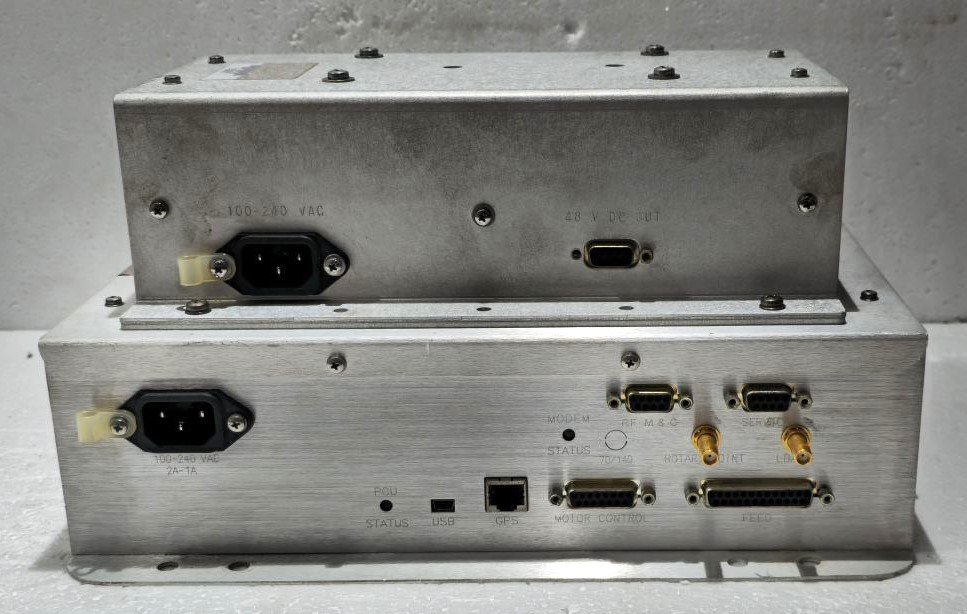
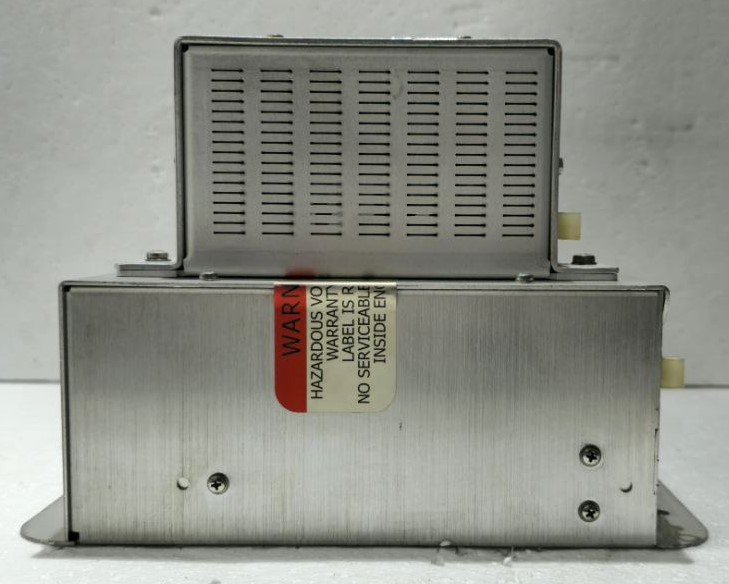
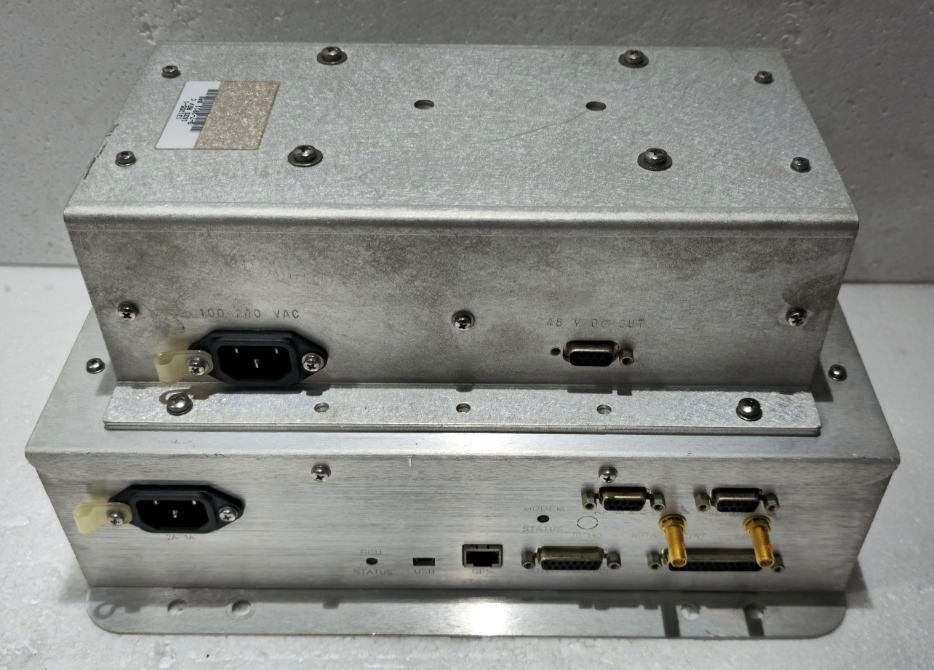
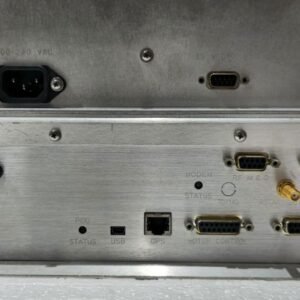
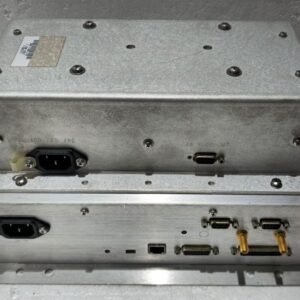
1. Primary Unit: PCU (Pedestal Control Unit) Assembly
-
Part Number: 131057-1 Rev C
-
Core Function: This is the “brain” and “nerve center” of the antenna system. It houses the primary electronics that control the motorized pedestal, process satellite signals, and manage the interface between the above-deck antenna (radome) and the below-deck modem/router.
-
Key Features & Components:
-
Integrated GPS Receiver: This is a critical feature. The built-in GPS provides real-time, highly accurate vessel position, heading, speed, and timing data. This information is essential for:
-
Rapid Satellite Acquisition: Knowing its exact location allows the system to quickly calculate and point to the target satellite.
-
Precise Stabilization: Heading data is fused with motion sensor data for accurate stabilization.
-
Network Compliance: Required for modern satellite networks (like Inmarsat’s FleetBroadband, KVH’s networks, or others) to manage beam switching and comply with licensing.
-
Pedestal Controller: Microprocessors and drive electronics that control the motors in the azimuth (full 360° rotation) and elevation axes.
-
Motion Sensor (IMU): An Inertial Measurement Unit detects the vessel’s movement in real-time. The PCU uses this data to send counter-movement commands to the pedestal, keeping the antenna locked on the satellite.
-
RF Components: Includes BUC (Block Upconverter) and LNB (Low-Noise Block Downconverter) controllers and power supplies, which manage the transmission and reception of microwave signals to/from the satellite.
-
Signal & Data Interface: Provides standardized connections (typically coaxial for RF, and Ethernet for data) to the user’s onboard network.
-
“Rev C”: Indicates this is the third major revision of the hardware, likely featuring component updates, improved processing, or enhanced firmware capabilities.
2. Critical Sub-Assembly: 48V DC Power Supply
-
Part Number: 131355-1
-
Core Function: To provide clean, stable, and regulated 48V DC power to the entire PCU Assembly and the antenna pedestal motors. Marine systems are heavily dependent on robust power supplies due to the harsh electrical environment.
-
Key Features:
-
Input Range: Designed to accept a wide range of typical vessel DC power inputs (e.g., 10-36V DC or 9-60V DC), accommodating for voltage fluctuations common in marine electrical systems.
-
Output: Provides a stable 48V DC output at the required amperage to drive the PCU electronics and the pedestal motors, especially during high-torque slewing or stabilization movements.
-
Protection: Includes safeguards such as over-voltage, under-voltage, reverse polarity, and short-circuit protection to prevent damage to the sensitive VSAT electronics from power anomalies.
-
Form Factor: Typically a sealed, ruggedized metal module that mounts inside the vessel’s equipment rack or near the PCU.
|