- AUTOMATION EQUIPMENT
- DIGITAL CONTROL
- ELECTRICAL ITEMS
- AMPLIFIER & UPS
- BATTERY CHARGER & INVERTER
- CIRCUIT BREAKER & BLOCKS
- CONTROL UNIT
- ELECTRIC CONTROLLERS
- FIRE ALARAM SYSTEM
- FUSES & CAPACITOR
- HEADPHONE & SPEAKER
- HMI & DISPLAY
- MISC ELECTRICAL
- PCB
- PLC SYSTEMS
- POWER SUPPLY
- PRINTER & CPU
- RELAY
- SENSORS
- SERVO DRIVES & MOTORS
- TELECOME & COMMUNICATION
- THERMOSTAT
- MACHINERY
- SENSORS
- UNCATEGORIZED



Hotline Order:
(+91) 97257 54777
Email ID:
shipnavstore@gmail.com

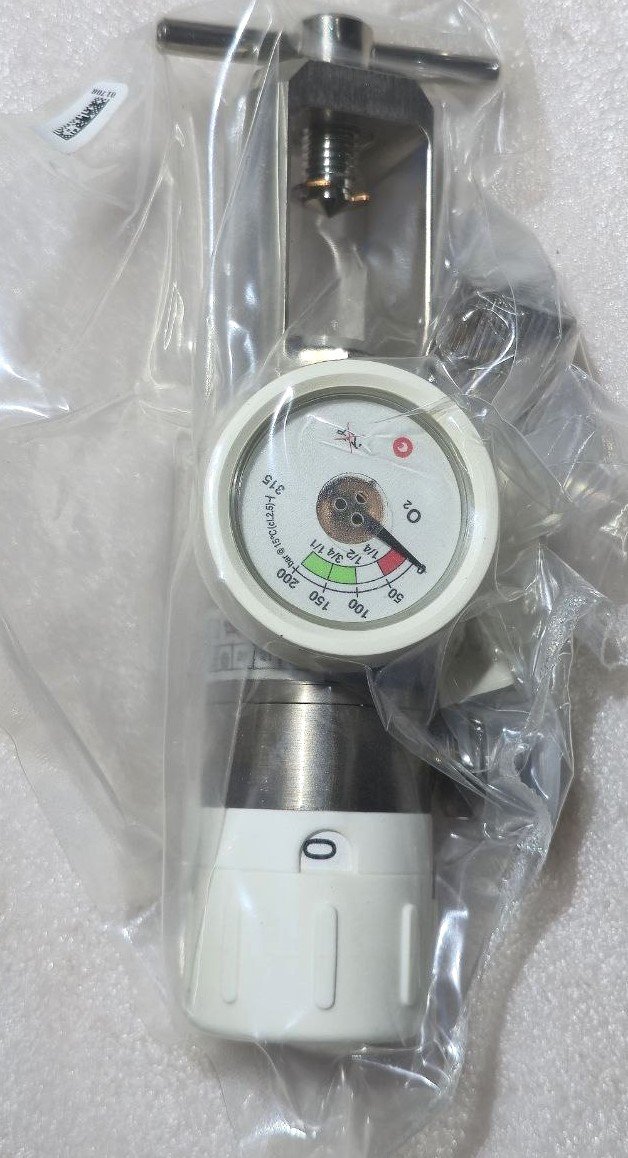
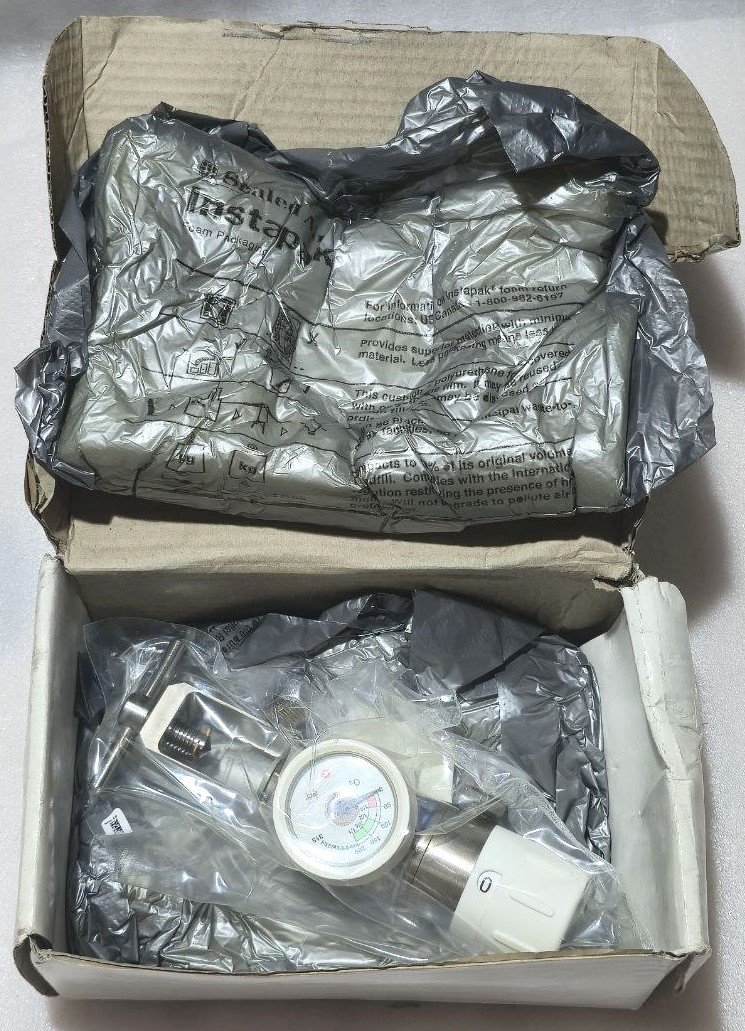
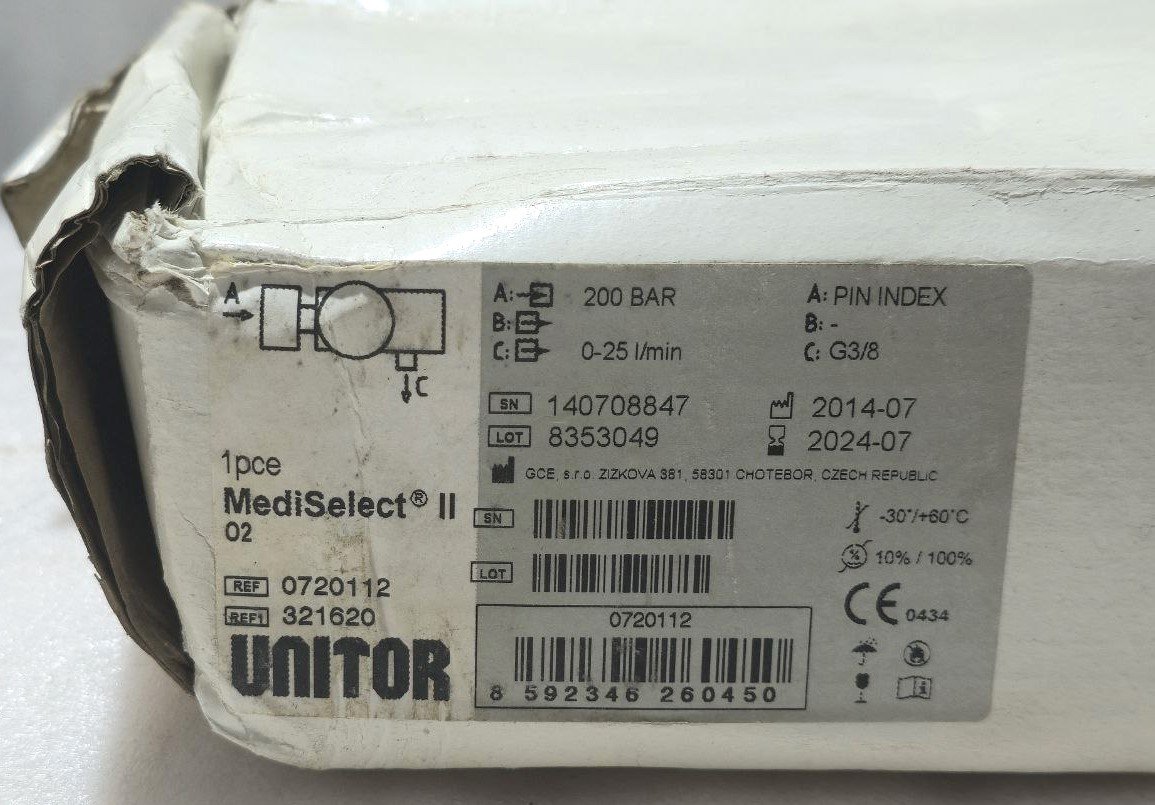
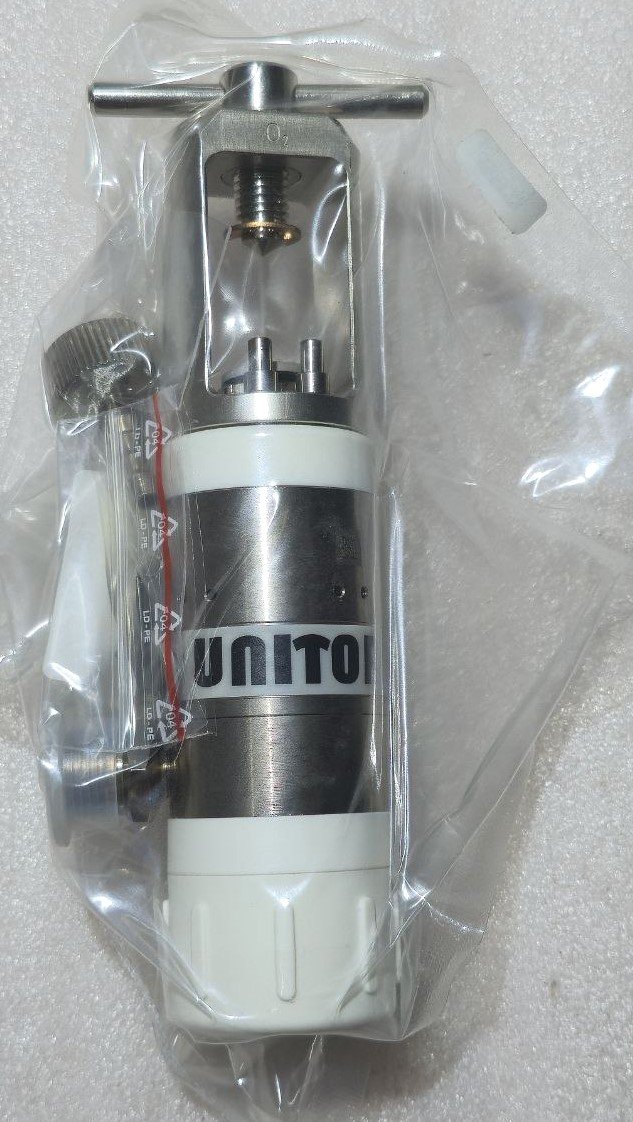
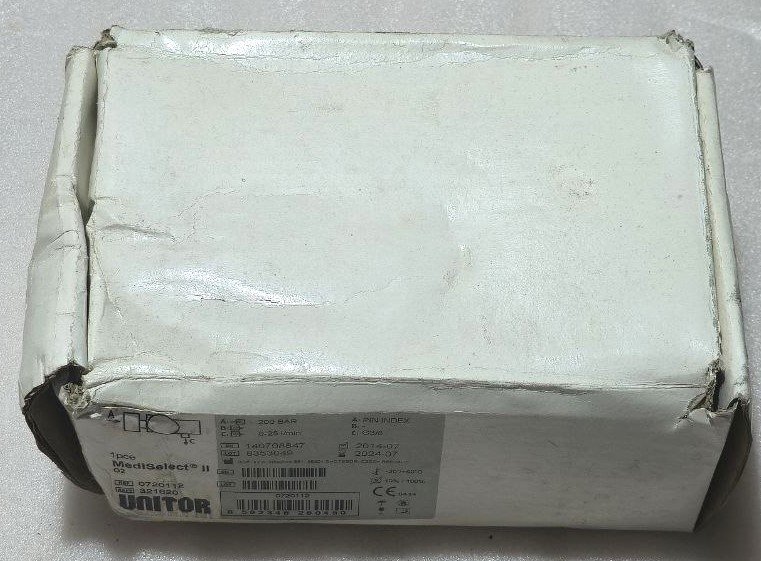
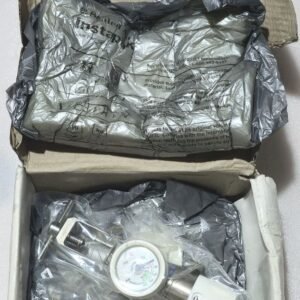
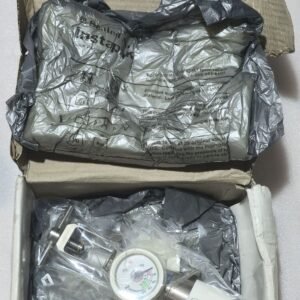
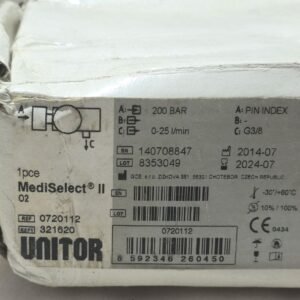
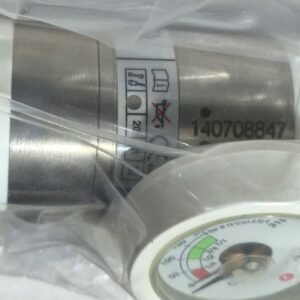
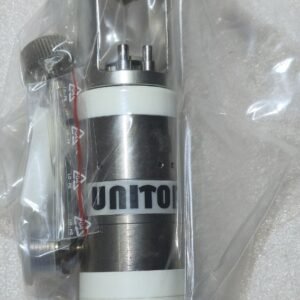
UNITOR MEDISELECT II MEDICAL OXYGEN REGULATOR 200 BAR 0-25 1/MIN
₹23,229.00
| Product Conditioned | NEW |
|---|
Free Shipping apply to all orders over $199
Guaranteed Money Back in 30 days return.
24/7 Customer Support
Share:
 UNITOR MEDISELECT II MEDICAL O...
₹23,229.00
1 in stock
Hotline Order:
(+101) 5620 - 8155
Email ID:
xstore@support.com
The UNITOR MEDISELECT II is a wall-mounted or cylinder-mounted pressure-reducing regulator. Its primary function is to take high-pressure oxygen from a central supply line or a large cylinder (at up to 200 Bar) and reduce it to a safe, usable working pressure, while allowing healthcare professionals to finely control the flow rate delivered to a patient.
Breakdown of the Product Name & Key Specifications
-
UNITOR: The manufacturer. UNITOR is a well-known, reputable brand in maritime and industrial gas solutions, now part of Dresser-Rand / Siemens. Their medical equipment is known for durability and reliability.
-
MEDISELECT II: The model name. “Medi” indicates it’s for medical use. “Select II” suggests it is a second generation or a specific series with enhanced features, typically referring to a robust design with a clear flowmeter.
-
Medical Oxygen: Explicitly states its intended use for medically certified oxygen (ISO 15001, ISO 10083, or similar standards). It is designed for purity and safety, using oxygen-clean components and materials compatible with high-oxygen environments to prevent fire risk.
-
200 BAR (3000 PSI): This is the maximum inlet pressure the regulator is designed to safely connect to. It corresponds to the standard pressure of a full large medical oxygen cylinder or a hospital’s central pipeline pressure. Never connect it to a source exceeding this pressure.
-
0-25 L/MIN (Liters Per Minute): This is the flow rate range of the flowmeter. It is a medium-to-high range flowmeter, suitable for:
-
Low Flow: 0-5 L/min for nasal cannulas.
-
Medium Flow: 5-15 L/min for simple oxygen masks, venturi masks, or nebulizers.
-
High Flow: Up to 25 L/min for non-rebreather masks, trauma, or specific therapy needs. It is NOT designed for mechanical ventilator driving gas, which often requires 50-100 L/min.
-
Typical Features & Components:
-
Inlet Connection: A threaded BS/EN ISO 4079 (or Pin Index) yoke for connection to a wall outlet or a cylinder valve.
-
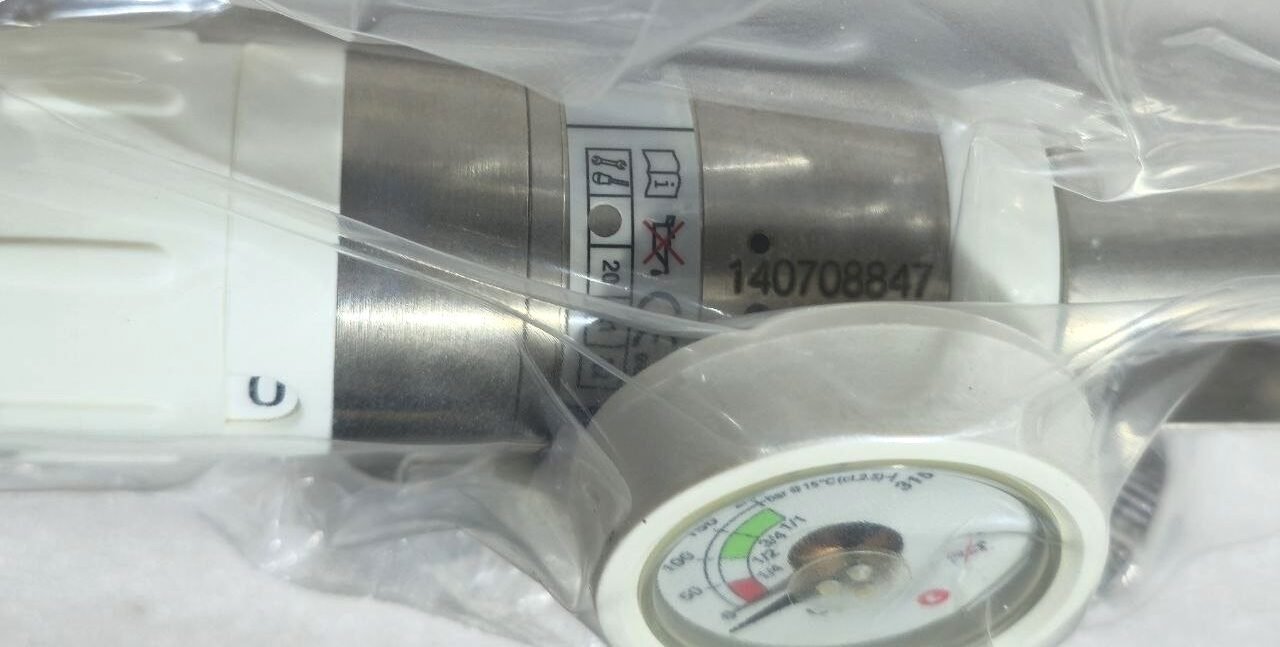
Pressure Gauge: A high-pressure gauge showing the supply pressure from the cylinder or central line (0-200 Bar or similar). This tells you how much oxygen is left in the source.
-
Pressure-Reducing Mechanism: An internal diaphragm/spring system that reduces the variable high inlet pressure to a constant lower outlet pressure (typically around 4 Bar / 60 PSI).
-
Flow Control Knob: A precise, often tactile knob for adjusting the flow rate.
-
Flowmeter: A rotameter (a calibrated tube with a floating ball or bobbin) that visually indicates the set flow rate in liters per minute (L/min). The scale is 0 to 25.
-
Outlet Connection: Standard DIS / Schrader (or similar) outlet for connecting the oxygen tubing that runs to the patient’s delivery device (mask, cannula).
-
Construction: Robust metal (brass, chrome-plated) body with safety glass or polycarbonate flowmeter tube.
Primary Applications & Use Cases
-
Hospital Wards: Bedside oxygen points.
-
Clinics & GP Surgeries: For minor procedures or therapy.
-
Nursing Homes / Long-Term Care Facilities: For patients requiring long-term oxygen therapy (LTOT).
-
Home Healthcare: When set up with a large oxygen cylinder.
-
Ambulances / Medical Transport: (As part of a fixed installation).
-
Administering oxygen via: Nasal cannula, simple face mask, venturi mask, non-rebreather mask, or for driving a medication nebulizer.
We're here when you need us
Get a Quick Quote
Complete our online form.
Call US
Speak to one of our team.
Live Chat
Send us a message
Speak to one of our team.