- AUTOMATION EQUIPMENT
- DIGITAL CONTROL
- ELECTRICAL ITEMS
- AMPLIFIER & UPS
- BATTERY CHARGER & INVERTER
- CIRCUIT BREAKER & BLOCKS
- CONTROL UNIT
- ELECTRIC CONTROLLERS
- FIRE ALARAM SYSTEM
- FUSES & CAPACITOR
- HEADPHONE & SPEAKER
- HMI & DISPLAY
- MISC ELECTRICAL
- PCB
- PLC SYSTEMS
- POWER SUPPLY
- PRINTER & CPU
- RELAY
- SENSORS
- SERVO DRIVES & MOTORS
- TELECOME & COMMUNICATION
- THERMOSTAT
- MACHINERY
- SENSORS
- UNCATEGORIZED

Hotline Order:
(+91) 97257 54777
Email ID:
shipnavstore@gmail.com

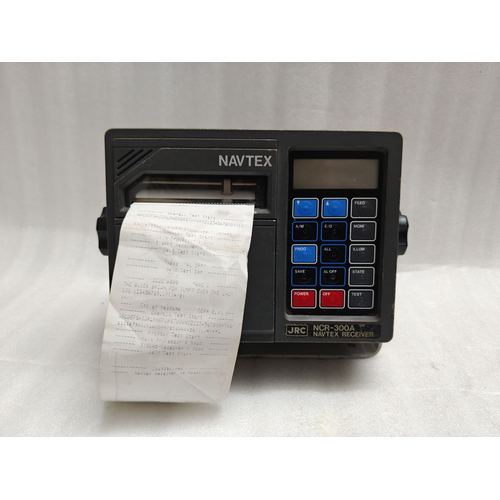
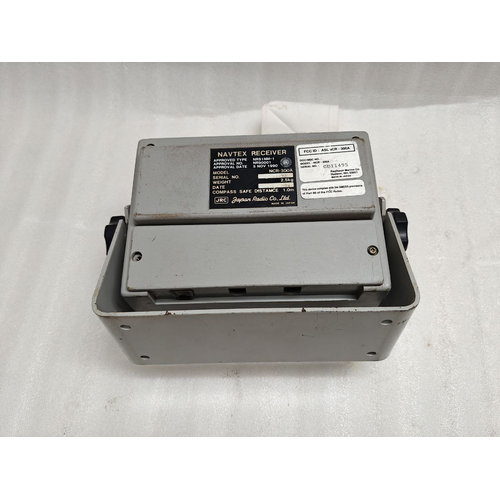
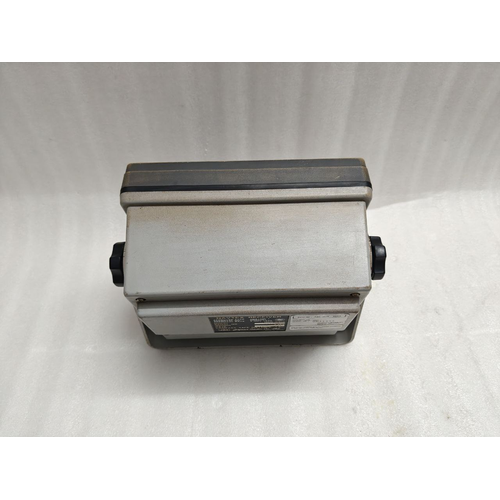
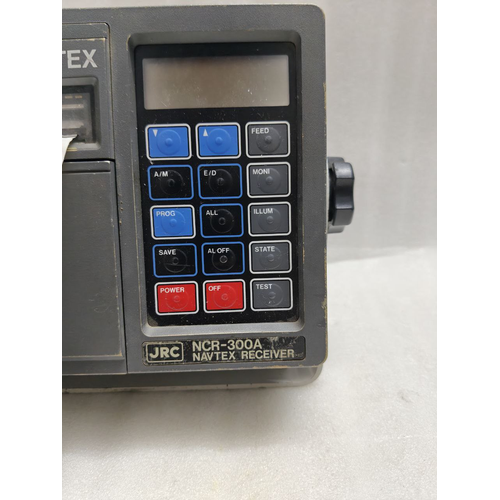
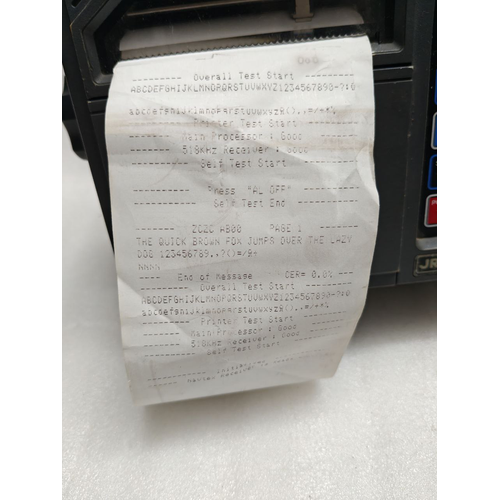
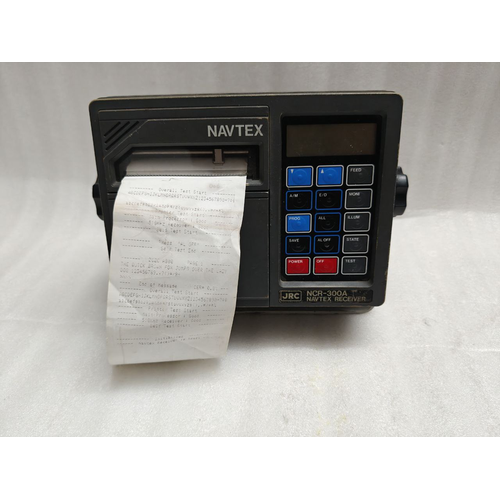
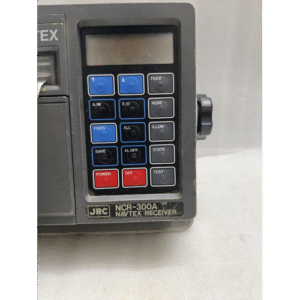
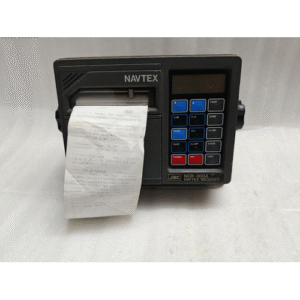
JAPAN RADIO CO. LTD. (JRC) NCR-300A NAVTEX RECIEVER,PRINTER, TYPE-NRS1NM-1 NR90001 GD11495 18:15
$187.00
| Product Conditioned | USED |
|---|
Free Shipping apply to all orders over $199
Guaranteed Money Back in 30 days return.
24/7 Customer Support
Share:
 JAPAN RADIO CO. LTD. (JRC) NCR...
$187.00
1 in stock
Hotline Order:
(+101) 5620 - 8155
Email ID:
xstore@support.com
JAPAN RADIO CO. LTD. (JRC) NCR-300A NAVTEX RECIEVER,PRINTER, TYPE-NRS1NM-1 NR900
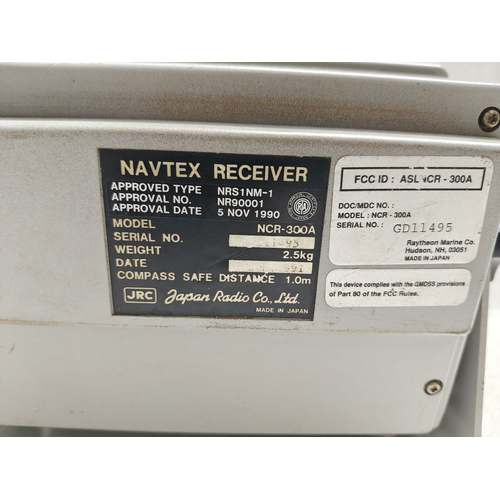
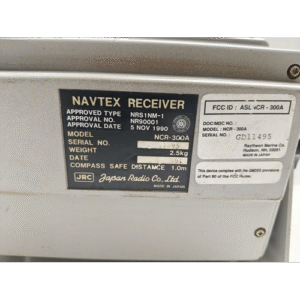
- NAVTEX RECEIVER
- BRAND: JRC
- MODEL: NCR-300A
- PRINTER
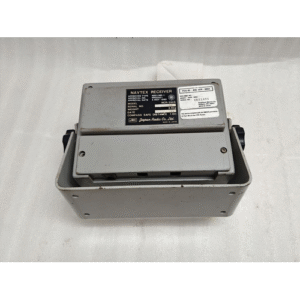
- APPROVED TYPE: NRS1NM-1
- APPROVAL NO: NR90001
- APPROVAL DATE: 5/11/90
- SERIAL NO: GD11495
- WEIGHT: 2.5 KG
- COMPASS SAFE DISTANCE: 1.0M
- JAPAN RADIO CO. LTD
- MADE IN JAPAN
Overview
The JRC NCR-300A is a professional marine NAVTEX receiver and printer system manufactured by Japan Radio Co. Ltd. (JRC). It was a common piece of equipment on ships built from the late 1980s through the 1990s, designed to automatically receive and print maritime safety information (MSI) as required by the Global Maritime Distress and Safety System (GMDSS).
The system you have specified consists of two main components: the NCR-300A Receiver and the NRS1NM-1 Printer. “NR90001” and “GD11495” are likely serial numbers or specific batch codes for the units, and “SEO” probably indicates the manufacturing origin (likely Seoul, South Korea, as JRC had production facilities there).
System Components
1. JRC NCR-300A NAVTEX Receiver
The receiver is the core unit that tunes into the international NAVTEX frequency (518 kHz) and, optionally, the national language frequency (490 kHz or 4209.5 kHz for HF).
-
Function: To select, decode, and process NAVTEX signals. It filters messages based on the user’s programmed settings (Geographical Area, Message Type) to avoid printing irrelevant information.
-
Key Features:
-
Automatic Operation: Once configured, it operates 24/7 without operator intervention.
-
Dual Frequency Reception: Capable of receiving both the international (518 kHz) and national (490 kHz) frequencies.
-
Advanced Filtering: Allows the operator to reject messages by:
-
Transmitter ID (B1): To receive information only from specific coastal stations in the ship’s vicinity.
-
Message Category (B2): To block certain types of messages (e.g., NAV warnings, Met warnings, etc.) that are not required.
-
-
Memory Function: Stores rejection settings and can store a log of received messages.
-
Built-in Monitoring: Features a small LCD or LED display and controls for system status, message review, and configuration.
-
Compliance: Designed to meet IMO GMDSS requirements for the NAVTEX receiver (Resolution A.525(13)).
-
2. JRC NRS1NM-1 Printer (Type-NRS1NM-1)
This is the dedicated thermal printer that works with the NCR-300A receiver.
-
Function: To provide a physical, permanent hard copy of all received NAVTEX messages. This paper record is crucial for the ship’s log and for bridge officers to review safety information.
-
Key Features:
-
Thermal Printing: Uses heat-sensitive paper, which is reliable, quiet, and requires no ink or ribbons.
-
Auto-print: Automatically prints messages as they are successfully received and decoded by the main unit.
-
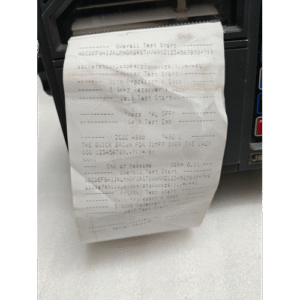
Manual Test Print: Includes a function to print a test page to verify printer operation and alignment.
-
Standard Paper: Typically uses a roll of thermal paper, common for marine electronics of that era.
-
Technical Specifications (Consolidated)
-
Receiving Frequencies:
-
Primary: 518 kHz (International English Language)
-
Secondary: 490 kHz (National Language)
-
(Optional) 4209.5 kHz (HF NAVTEX)
-
-
Mode: F1B / J2B (Frequency Shift Keying)
-
Sensitivity: Typically better than 10 µV for a low error rate.
-
Selectivity: Designed to reject adjacent channel interference.
-
Printing Method: Direct thermal line printing.
-
Paper: Standard thermal paper roll.
-
Power Supply: 24 V DC / 110 V AC / 220 V AC (Marine standard voltages). The specific unit would be configured for the ship’s supply.
-
Interfaces: Direct cable connection between receiver and printer.
Purpose and Importance in GMDSS
The NCR-300A system was a key part of a ship’s GMDSS installation, specifically fulfilling the requirement for the receipt of Maritime Safety Information (MSI) in coastal waters. The information it automatically prints includes:
-
Navigational Warnings (B2=A): Hazards to navigation.
-
Meteorological Warnings (B2=B): Gale and storm warnings.
-
Ice Reports (B2=D): Information on ice hazards.
-
Search and Rescue Information (B2=E): Alerts and information.
-
Meteorological Forecasts (B2=F): Routine weather forecasts.
-
Pilot Service Messages (B2=H): Status of pilot services.
-
DECCA/LORAN/SATNAV Messages (B2=K): Status of radio navigation systems (largely obsolete now).
-
Other Urgent Information: As broadcast by coastal authorities.
We're here when you need us
Get a Quick Quote
Complete our online form.
Call US
Speak to one of our team.
Live Chat
Send us a message
Speak to one of our team.